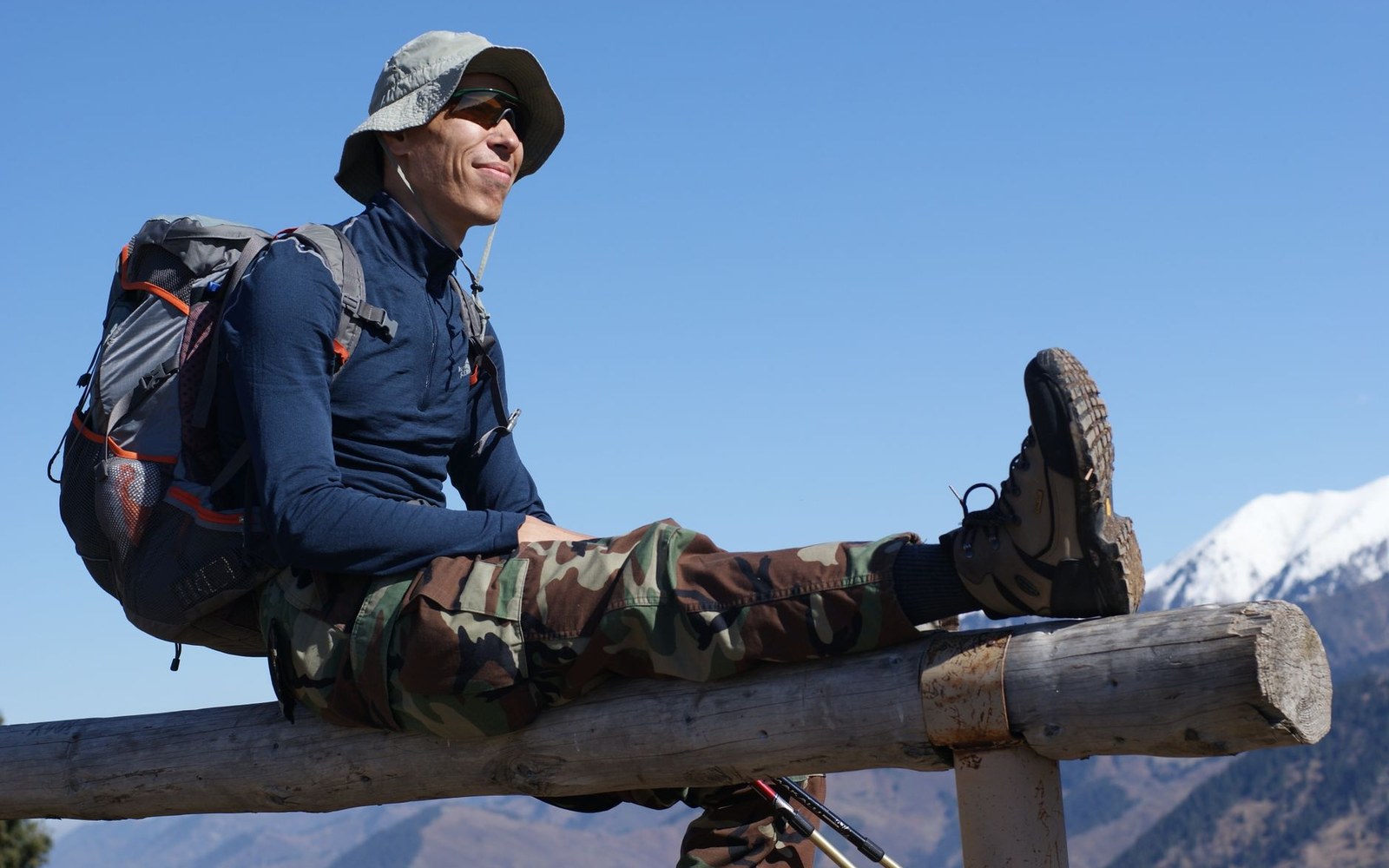
UPF clothing is moving from specialist outdoor gear into ordinary shirts, swimwear and travel wardrobes. The label is useful because it describes fabric performance rather than asking you to guess from colour or thickness. It still needs context: coverage, stretch, wet fabric and exposed edges decide how much work the garment actually does.
UPF measures fabric; SPF labels a sunscreen
Ultraviolet Protection Factor describes how much UVA and UVB radiation a fabric allows to pass through. A fabric rated UPF 50 allows roughly one fiftieth of the relevant UV radiation through under the test conditions. The Skin Cancer Foundation’s clothing guide describes UPF 30 to 49 as very good protection and UPF 50+ as excellent.
That number does not tell you whether the garment covers the back of the neck, stays in place during swimming or feels wearable in humidity. A high rating on a tiny panel cannot protect skin outside the panel. Start with coverage, then use the rating to compare fabrics that perform the same job.
SPF and UPF are not interchangeable shopping numbers. Sunscreen is tested as a product applied to skin at a defined amount. UPF is assigned to fabric. Both can be part of the same day, but there is no useful arithmetic such as adding UPF 50 clothing to SPF 50 lotion to create “100 protection”.

The rating is only one part of fabric performance
Weave and fibre
Densely constructed fabric generally transmits less UV than an open, sheer weave. Some lightweight technical fabrics achieve a high UPF rating without feeling like heavy canvas, which is why the label is more useful than judging by weight alone. Hold an unlabelled garment up to bright light as a rough clue, not as a laboratory result.
Stretch and fit
A tight garment can pull fibres apart and reduce coverage in the stretched areas. This is especially relevant across shoulders, elbows, knees and swimwear. A looser cut may also be more comfortable in heat, making it more likely to stay on rather than being removed halfway through the day.
Wet fabric
Water can change the optical behaviour of fabric and make some materials more transparent. A garment designed and labelled for swimming is a better bet than assuming an ordinary white T-shirt will provide the same performance when soaked. Check whether the maker describes the UPF rating for the garment’s intended wet use.
Age and care
Repeated wear, abrasion and laundering can alter fibres, coatings and stretch. Follow the care label. Replace garments that have become thin, badly stretched or damaged in high-exposure areas. A UPF label is not permission to ignore a worn-through shoulder panel.
Long sleeves, higher necks and longer hems reduce the number of exposed zones.
Reach, bend and sit before buying; watch for the garment riding up or opening.
Choose swim-specific construction for pools, beaches and repeated immersion.
Read washing instructions and inspect areas that rub against bags and straps.
Where clothing stops and sunscreen starts
The obvious exposed areas are face, ears, neck, hands and feet. The less obvious ones are the narrow bands that appear when you move: between glove and sleeve, above a waistband, at the back of a collar, under a ponytail and around sandal straps. Apply sunscreen beyond the visible edge so normal movement does not create an untreated line.
A brimmed hat reduces direct exposure to the scalp and face, but brim width, angle and reflected light matter. Sunglasses protect the eyes and surrounding area when they fit well. These layers reduce how much skin depends on sunscreen, which is useful during long days when reapplication is inconvenient.
For common missed zones, see neck, ears and hands and the guide to scalp partings and thinning hair. The aim is not to cover every centimetre with every method. It is to avoid a gap that no method covers.

Match the clothing system to the day
| Use case | Useful clothing features | Sunscreen focus |
|---|---|---|
| City walking | Breathable overshirt, hat that packs flat | Face, ears, hands and open neckline |
| Hiking | Long sleeves, stable collar, venting, backpack-compatible seams | Hands, face, neck and any area exposed when reaching |
| Swimming | Swim-rated UPF top with close neck and secure hem | Face, ears, legs, hands and uncovered edges after towel drying |
| Travel day | Light layer that works in transit and at the destination | Areas exposed during queues, transfers and outdoor meals |
For a full day near water, combine this framework with our water-resistant sunscreen guide. Water resistance does not make sunscreen permanent, and a rash vest does not cover legs, face or moving seams.
Do a five-minute wear test at home
Put on the full setup, including backpack, hat or swim layer, and move as you will outside. Reach overhead, crouch, turn the head and sit down. Mark every strip of skin that appears. This quick test often finds a lower back gap, an open wrist, the side of the neck or a hat brim that collapses against the face. Those findings are more useful than choosing between two shirts that carry the same UPF number.
Repeat the check when a child grows, a garment loosens or a bag changes. Coverage is a moving fit question, not a one-time label decision.
A buying checklist without brand hype
- Define the activity. A commuter shirt, hiking hoodie and rash vest solve different problems.
- Check the tested UPF rating. Prefer a stated number over vague wording such as “sun ready”.
- Try the movement range. Raise arms, bend and turn to find exposed gaps.
- Read the care instructions. Note whether the rating depends on a treatment or special wash routine.
- Plan the uncovered skin. Pack enough sunscreen for the areas the garment does not cover.
The Australian Radiation Protection and Nuclear Safety Agency’s official UPF labelling guidance explains that the rating applies to tested fabric and that garments made from multiple materials are limited by the lowest-rated material. Coverage, fit and fabric condition still matter. For a weather-led plan, check the UV index rather than temperature alone.
Frequently asked questions
Do I need sunscreen under UPF 50 clothing?
Usually the garment handles the skin it fully covers. Apply sunscreen to exposed skin and around edges that move. Follow specific public-health advice for your circumstances.
Is a normal T-shirt enough?
It provides some coverage, but performance varies with weave, colour, stretch and moisture. A tested UPF garment gives a clearer reference.
Does UPF wash out?
It depends on how the fabric achieves its rating. Follow the care label and replace garments that are thin, stretched or damaged.
Is UPF 50 twice as protective as UPF 25?
The numbers describe the fraction of UV transmitted, not a simple feeling of “twice as safe”. Coverage and wear conditions still matter.
Can UPF clothing replace reapplication?
It reduces the area that needs sunscreen. Exposed skin still needs its own plan after time, sweat, swimming or towel drying.
Bottom line
UPF clothing is useful because fabric does not need to be reapplied every two hours. Its weak point is geometry: sleeves move, necklines open and large areas remain uncovered. Buy for the activity, check the garment in motion, and assign sunscreen to the gaps instead of making either product carry the whole day.