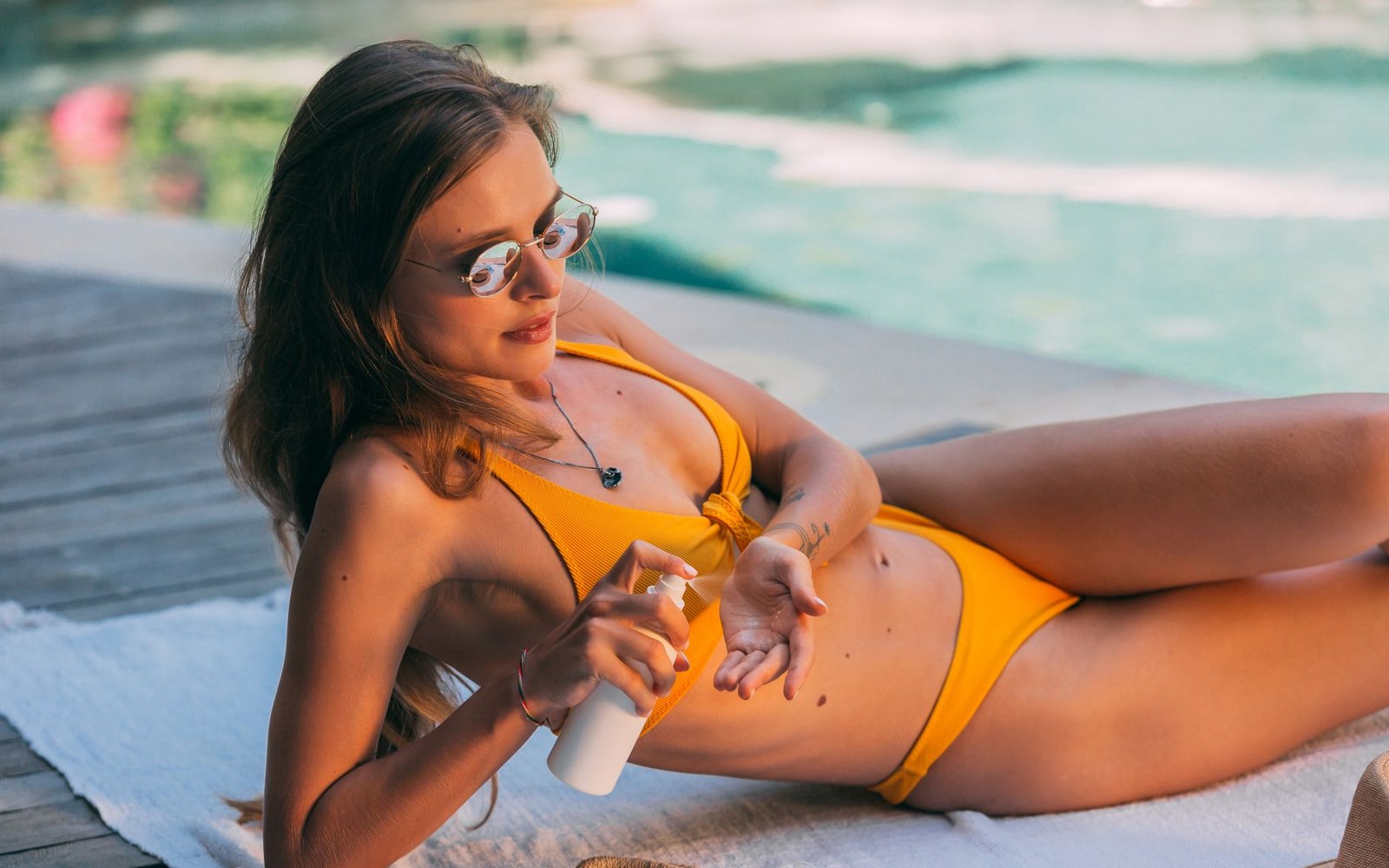
Self-tan and sunscreen solve different problems. A self-tanner changes the colour of the outermost skin cells; it does not create meaningful UV protection. The practical question is therefore not which product should win, but how to keep the tanning step from disrupting a sunscreen film that needs to be even and generous.
A cosmetic tan is colour, not a protection rating
Most sunless tanning products use dihydroxyacetone, usually shortened to DHA, to create a temporary colour change at the surface of the skin. That colour can make exposed skin look as though it has already spent time in the sun. It does not mean the skin is prepared for more UV exposure.
This distinction matters on holiday and during hot weather because the visible tan can alter judgement. It is easy to think that darker-looking skin is less likely to burn, then reduce the amount of sunscreen or delay reapplication. Treat the self-tan as makeup: it changes appearance, while the sun-protection plan still depends on the UV index, time outside, clothing, shade and a correctly used sunscreen.
Two schedules that keep the products separate
Schedule one: develop the tan overnight
This is the lowest-friction option. Exfoliate only as directed by the tanning product, apply self-tan to clean, dry skin in the evening, and let it develop for the stated time. Wash or rinse only if the directions require it. The next morning, the tanning step is finished before sunscreen enters the routine.
- Evening: cleanse, dry the skin fully and apply the self-tanner according to its directions.
- Morning: use a gentle cleanse if needed, then apply a light moisturiser or other familiar products.
- Last skincare layer: apply sunscreen evenly and allow it to settle before makeup or clothing rubs across it.
The overnight method also separates self-tan from stronger evening products. If retinoids or exfoliating acids already make the skin dry or reactive, using them on the same night as a tanning product can make the result less predictable. Our guide to SPF with retinoids and exfoliating acids explains why a simpler routine is often easier to maintain.
Schedule two: self-tan and outdoor plans on the same day
Same-day timing is less forgiving. The tanning product needs time to dry and develop, while sunscreen needs an even film that is not diluted by another wet product. Follow the self-tanner’s stated development time rather than inventing a ten-minute shortcut. If the instructions call for several hours before rinsing, a morning application may be a poor fit for a day that starts outdoors.
If time is short, the honest choice may be to postpone the tan. Mixing tanning drops into sunscreen looks efficient, but it changes the amount and distribution of a product whose labelled protection was established as a finished formula. The same logic applies to mixing sunscreen with foundation or moisturiser in the palm. Layering gives each product a chance to form its own film; mixing creates a new, untested ratio.
Best when the tan needs a long development window and the next day starts outside.
Only practical when the tanning product directions allow enough drying and development time.
Keep tanning drops, moisturiser, foundation and sunscreen as separate measured layers.
Where sunscreen sits in a face routine
For a normal morning, sunscreen is the final skincare step. A simple sequence is cleanse, optional hydrating serum, moisturiser if needed, then sunscreen. Makeup follows after the sunscreen has settled. The exact waiting time is less important than whether the surface still feels wet and moves when touched.
Too many layers can make the routine unstable. If a tanning serum, hydrating serum, rich moisturiser, facial oil, sunscreen and base makeup all sit on the face at once, pilling is not surprising. Remove the least necessary morning layer rather than rubbing harder. The simple morning routine with SPF provides a useful reset, and our pilling guide covers application pressure and incompatible textures.
Hot weather adds sweat, friction and reapplication
A carefully layered morning can still change by lunchtime. Sweat, swimming, towels, hat straps and shirt collars can remove product. Reapplication is about the current sunscreen film, not the age of the self-tan underneath it.
For the face, carry a sunscreen format you can apply in a real setting. If you wear makeup, decide whether you will press on a lotion, use a measured fluid, or remove and rebuild the base for a long outdoor period. Our guide to reapplying sunscreen over makeup compares those compromises. For the body, pay attention to shoulders, chest, tops of feet and any area where straps move.
Self-tan may fade unevenly in the same places because sweat and friction speed up exfoliation. That is a cosmetic problem, not a reason to apply less sunscreen. A patchy tan is fixed later; inadequate protection cannot be corrected after the outdoor exposure has already happened.
Troubleshooting the common failures
| Problem | Likely cause | Better next step |
|---|---|---|
| Sunscreen rolls into flakes | Too many wet layers or vigorous rubbing | Reduce the routine, allow settling time and press rather than scrub |
| Tan looks patchy around dry areas | Uneven surface texture or repeated friction | Follow the tanning directions and moisturise dry edges before the next application |
| Face feels greasy by midday | Rich moisturiser plus emollient sunscreen in heat | Use a lighter moisturiser or skip it where the sunscreen is comfortable alone |
| Colour transfers to clothing | Self-tan or sunscreen had not dried before dressing | Allow more drying time and choose loose clothing for the development period |
A practical label check before combining routines
Read both sets of directions. Development time, rinsing, exfoliation advice and warnings belong to the tanning product. SPF, broad-spectrum wording, water resistance and reapplication directions belong to the sunscreen. Do not let a bronzing claim distract from the sunscreen label. If the product is sold in a different market, symbols and wording may differ, so use our guide to reading sunscreen labels rather than comparing the front numbers alone.
Cancer Research UK’s guidance on fake tan and UV protection states that a cosmetic tan does not replace sun protection. The FDA overview of tanning products explains the role of DHA and notes that most tanning products do not provide sun protection unless they are separately labelled to do so.
Frequently asked questions
Does fake tan count as SPF?
No. A cosmetic colour change is not a substitute for a labelled, broad-spectrum sunscreen. Use shade, clothing and sunscreen according to the day.
Can tanning drops be mixed into sunscreen?
Keep them separate. Mixing changes the sunscreen’s tested formula and makes the applied amount harder to judge.
Should self-tan go before or after sunscreen?
Ideally, develop the self-tan the evening before. If both are used in one morning, follow the tanning directions, let it dry fully, and apply sunscreen as the last skincare layer.
Will reapplying sunscreen remove self-tan?
Rubbing and repeated cleansing may fade cosmetic colour, but that is not a reason to skip reapplication after sweat, water or prolonged outdoor time.
What if self-tan irritates my skin?
Stop using the product and simplify the routine. Persistent or significant reactions need appropriate professional advice rather than another layer of skincare.
Bottom line
The cleanest routine separates the two jobs. Let self-tan develop when there is time to follow its directions. Apply sunscreen later as a complete, even layer, then make reapplication decisions from the day’s UV, heat, water and friction. The tan may change how skin looks; it should not change how seriously the sun-protection plan is taken.